Python's GIL Problem
2016-11-20
osdodo
Python's GIL means the interpreter can only run one thread at a time. Here is a demonstration:
Multiprocessing test:
from multiprocessing import Process

def loop():
    while True:
        pass

p1 = Process(target=loop)
p1.start()
loop()
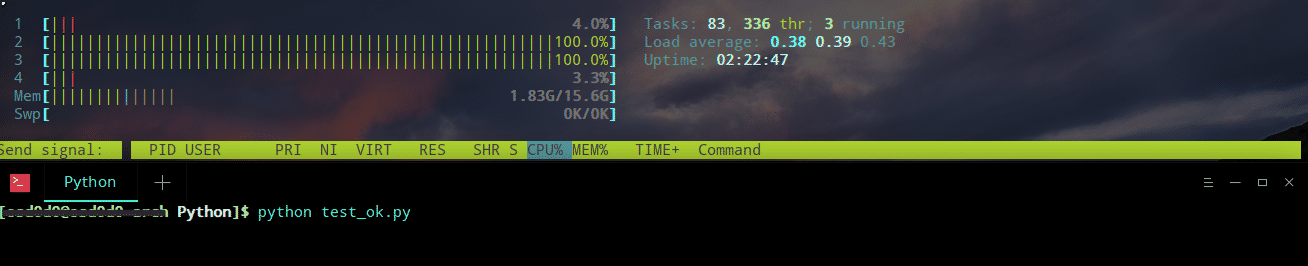
The result below shows two cores fully pegged:

Multithreading test:
from threading import Thread

def loop():
    while True:
        pass

t1 = Thread(target=loop)
t1.start()
loop()
The result below shows no core fully pegged — the threads are merely context-switching:

The fix:
Because of the GIL, multiple threads can't be interpreted at the same time. So let the Python interpreter run the main thread, and put the other work in a dynamic library compiled from a statically typed language — that way you can make full use of multiple cores.
// loop.c, compile with: gcc loop.c -shared -o libloop.so
void loop(){
    while(1){
        ;
    }
}
from ctypes import *
from threading import Thread
def loop():
while True:
pass
lib = cdll.LoadLibrary('./libloop.so')
t1 = Thread(target=lib.loop)
t1.start()
loop()The result below shows that multithreading now pegs two cores just like multiprocessing: